


Why Is Stretching Important? Benefits, Types, and Safe Tips

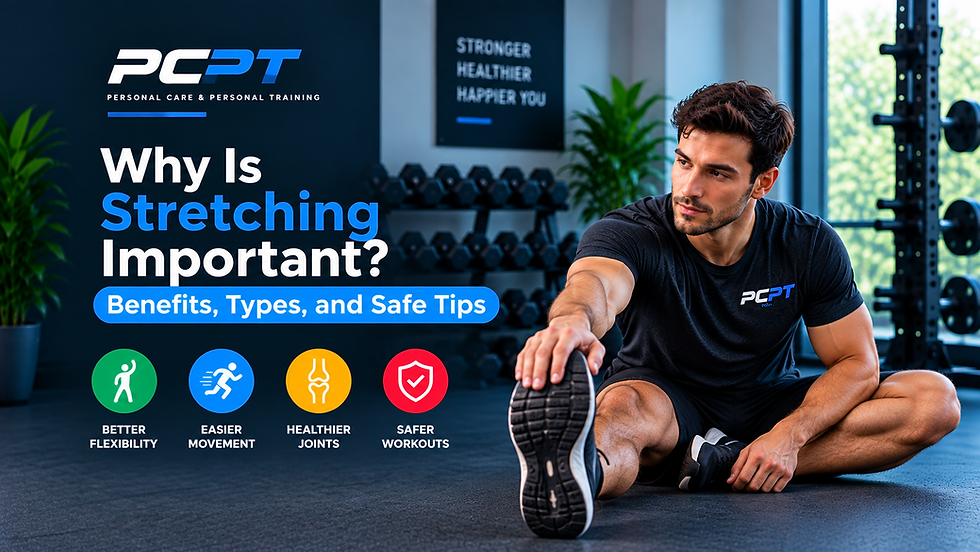
Stretching is a simple way to help your body move better. It can improve flexibility and make some daily movements and exercises feel easier.
You do not need to be very flexible to benefit from stretching. A few simple stretches can be enough to work on areas that feel stiff or hard to move. The type of stretching you use also matters. Dynamic stretching can work well before exercise, while static stretching is often better after exercise or during a separate stretching session.
QUICK ANSWER: Stretching is important because it can improve flexibility and help you move more freely. Dynamic stretching can prepare your body before exercise. Static stretching can help you work on flexibility after exercise or during a separate session.
Myth vs. Fact About Stretching
Myth | Fact |
You should always stretch before every workout. | Dynamic movement is usually better before exercise. Static stretching is often more useful afterward. |
Stretching alone will stop you from getting hurt. | Stretching helps, but strength, form, and recovery also affect injury risk. |
You need to be flexible to start stretching. | Anyone can stretch. You simply work within your own comfortable range. |
More pain means a better stretch. | A gentle pull is enough. Sharp or lasting pain is a sign to stop. |
Once you are flexible, you can stop stretching. | Flexibility can fade over time without regular practice. |
What Are the Benefits of Stretching?
Regular stretching can help you move your body more freely. It may also make some exercises and daily activities easier.
Here are some common stretching benefits:
Better flexibility
Easier movement
More comfortable joint movement
Better preparation for exercise
Support for a regular mobility routine
Stretching should feel gentle. You should not need to push your body into painful positions.
Why Is Stretching Important Before Exercise?
Stretching before a workout can help you prepare for movement. However, the type of stretching matters. Dynamic stretching uses slow and controlled movements. You move your body instead of staying in one position.
Examples include:
Leg swings
Arm circles
Walking lunges
Hip circles
Bodyweight squats
You can add these movements to a warm-up before strength training, running, sports, or other activities. The goal is to gradually get your body ready for the workout.
Is It Better to Stretch Before or After a Workout?
It depends on the type of stretching. Dynamic stretching can be useful before exercise. Static stretching is often better after exercise or during a separate stretching session. The table below shows where each type can fit into your routine.
When | Type | Example |
Before exercise | Dynamic stretching | Leg swings |
During a stretching session | Static stretching | Hamstring stretch |
After exercise | Gentle static stretching | Calf stretch |
You can also stretch at another time of day if improving flexibility is one of your goals.
What Is the Difference Between Dynamic and Static Stretching?
Dynamic stretching involves moving your body through a comfortable range, while static stretching involves holding a stretch in one position. This is the main difference between the two.
Dynamic stretching keeps the body moving. Common examples include leg swings, arm circles, and walking lunges. Static stretching is more still, such as holding a hamstring, calf, or shoulder stretch. The two types can have different roles in a workout. Dynamic movements can help prepare your body for activity, while static stretches can be useful when you are working on flexibility.
Example: A leg swing is dynamic because your leg keeps moving. A hamstring stretch is static because you hold the position.
What Is the Difference Between Stretching and Mobility Work?
Stretching and mobility work are related, but they are not exactly the same thing.
Stretching mainly lengthens a muscle. Mobility work is about how well you can control a joint through its full range of motion, not just how far it can move. A hip flexor stretch loosens a tight muscle. A slow, controlled hip circle done with good form builds control through that same range.
Many workout plans use both. Stretching can help loosen a stiff area, while mobility drills teach your body to use that new range safely during real movement, like a squat or a lunge.
Can Stretching Improve Flexibility?
Yes. Regular stretching can help improve flexibility.
Flexibility means how far you can move a joint comfortably. Everyone starts at a different level. You do not need to force a deep stretch. Work slowly and give your body time to adjust. For example, if you cannot comfortably reach your toes, do not force yourself to touch them. Work within the range you have and improve it over time.
Does Stretching Improve Range of Motion?
Stretching can help you move a joint through a larger comfortable range.
This can be useful for exercises such as squats, lunges, overhead movements, and other activities that need good movement. However, more range is not always better. You should also be able to control the movement. For this reason, stretching can work well alongside strength exercises.
Can You Stretch Too Much?
Yes, it is possible. Pushing too hard, too often, or holding a stretch to the point of pain can strain a muscle instead of helping it.
Some people are naturally very flexible, sometimes called hypermobile. For these people, chasing extra range without building strength around a joint can make that joint feel less stable, not more capable. A useful guide is to stop at a gentle pull, never at sharp pain, and to balance stretching with strength work so your joints stay both mobile and supported.
Should You Stretch Every Day?
You can stretch every day if the movements feel comfortable and fit your needs. You do not need a long session. Even a few minutes can give you time to work on areas that feel stiff. For general flexibility, regular practice is more useful than doing a very hard stretching session once in a while. If a stretch causes pain, stop rather than trying to push through it.
How Long Should You Hold a Stretch?
There is no single time that works for everyone.
For a static stretch, hold the position long enough to feel a gentle pull. Do not hold it so hard that you feel pain. Breathe normally while you stretch. Try to stay relaxed instead of forcing the muscle deeper into the stretch. Your stretching time can also change depending on your goal and fitness level.
Does Stretching Help With Muscle Soreness After a Workout?
Gentle stretching after a workout will not completely stop muscle soreness, but many people find it makes the muscle feel more comfortable in the hours afterward.
The soreness that shows up a day or two after a hard workout is a normal response to new or harder training, not a sign that something is wrong. Light movement, easy stretching, water, and rest tend to help more than any single stretch. If soreness is severe, does not fade after a few days, or feels like sharp pain rather than tightness, it is worth checking with a healthcare professional.
Can Stretching Help Tight Muscles?
Stretching can make tight muscles feel more comfortable for a while.
But tight muscles can have different causes. Training, sitting for long periods, poor movement habits, and tired muscles can all play a role. If the same area keeps feeling tight, stretching may not be the only thing you need. Strength exercises and better movement habits may also help. If tightness comes with pain or does not improve, it is better to speak with a healthcare professional.
Can Stretching Help if You Sit at a Desk All Day?
Yes. Long periods of sitting can leave your hips, chest, and shoulders feeling tight, and your lower back stiff.
A few short stretching breaks during the day can ease that stiffness. Standing hip flexor stretches, chest openers, and gentle neck and shoulder rolls are easy to fit into a workday.
Getting up and moving every hour, even for a minute or two, often helps as much as the stretch itself, since the main issue is staying in one position for too long.
Does Stretching Prevent Injuries?
Stretching alone cannot prevent every injury.
Your exercise form, strength, workout plan, recovery, and how quickly you increase your training can also affect injury risk. Stretching can still have a useful place in a workout plan. Just do not depend on stretching as the only way to stay safe during exercise.
Can Older Adults Benefit From Stretching?
Yes, and it can matter more with age. Flexibility and joint range naturally tend to decrease over the years, which can make everyday tasks like reaching, bending, or getting up from a chair feel harder.
Gentle, regular stretching can help older adults keep more comfortable movement. It works best alongside strength work, since muscle naturally tends to decrease with age too, and stronger muscles help support and protect joints. Many people notice steady progress in how they move once stretching and strength training become a regular habit rather than an occasional effort.
What Are the Best Stretches for Beginners?
Beginners can start with simple stretches that work different parts of the body.
Calf Stretch Place one foot behind you and keep the back heel on the floor. Lean forward slowly until you feel a gentle stretch in your calf.
Hamstring Stretch Sit or stand with one leg straight. Lean forward slightly while keeping your back comfortable.
Quadriceps Stretch Stand and hold onto something for balance. Bend one knee and gently bring your heel toward your body.
Hip Flexor Stretch Move into a comfortable lunge position. Keep your body upright and gently move your hips forward.
Shoulder Stretch Bring one arm across your chest. Use the other arm to gently pull it closer.
You do not need to do all of these at once. Choose stretches that fit your needs.
Is Morning Stretching Good for You?
Morning stretching can be a good way to wake up your body, especially if you tend to feel stiff after sleeping.
Since your muscles are cooler first thing in the morning, gentle movement works better than a hard, deep stretch. Slow dynamic movements, like arm circles or easy leg swings, are usually a better fit than long static holds. If you prefer static stretches in the morning, ease into them slowly and stop well short of any pulling pain.
What Should You Avoid When Stretching?
Stretching should be controlled and comfortable.
Avoid these common mistakes:
Bouncing hard while stretching
Forcing a stretch
Holding your breath
Stretching through sharp pain
Trying to copy someone else's flexibility
Doing very deep stretches when your body is not ready
A gentle pulling feeling is usually enough. You do not need pain to make a stretch effective.
How Can You Add Stretching to Your Workout?
You can keep your routine simple.
Before your workout: Start with light movement and use dynamic stretches that match your activity.
During your workout: Focus on your main exercises rather than stopping often to stretch.
After your workout: You can use a few gentle static stretches if they fit your routine.
On rest days: A short stretching session can be useful if you want to work on flexibility.
The best routine is one that you can follow regularly.
Can a Personal Trainer Help With Stretching and Mobility?
A personal trainer can help you choose stretches based on your fitness level and goals.
They can also show you how to perform each movement correctly. This can be useful if you are new to exercise or are not sure which areas need more mobility work. Stretching is only one part of fitness. Your workout may also include strength training, cardio, balance work, and other exercises based on your goals.
Where Can You Get Personal Training in Cincinnati?
Personal Care and Personal Training (PCPT) offers private, one-on-one personal training in Cincinnati.
Training can be adjusted to your fitness level, fitness goals, and experience. Sessions can include strength training, cardio, mobility work, and other exercises that support your goals.
PCPT is located at 110 W. 15th Street, Cincinnati, Ohio 45202. You can contact the studio to learn more about personal training and fitness assessment options.
3 Simple Stretching Tips for Beginners
Start slowly. Do not force your body into a deep stretch.
Keep breathing. Relax and breathe normally while holding a stretch.
Be consistent. A few minutes of regular stretching can be more useful than one long session once in a while.
Conclusion
Stretching is a simple way to work on flexibility and movement. It can be useful before exercise, after exercise, or as part of a separate stretching routine. The key is to use the right type of stretching for your activity. Use controlled movements before exercise and gentle static stretches when working on flexibility.
You do not need to become extremely flexible. Start with simple movements, avoid pain, and practice regularly. If you want help building a workout that includes stretching, strength training, and other exercises, PCPT provides one-on-one personal training in Cincinnati.
Frequently Asked Questions
Why is stretching important? Stretching can improve flexibility and help you move more freely during exercise and daily activities.
Is it better to stretch before or after a workout? Dynamic stretching can work well before exercise. Static stretching is often better after exercise or during a separate stretching session.
Can stretching improve flexibility? Yes. Regular stretching can help improve flexibility over time.
Should I stretch every day? You can stretch every day if it feels comfortable. A short session can be enough for general flexibility work.
How long should you hold a stretch? Hold a static stretch long enough to feel a gentle pull. Avoid forcing the position or stretching through pain.
What is the difference between static and dynamic stretching? Dynamic stretching uses controlled movement, while static stretching means holding one position.
Can stretching help tight muscles? Stretching may help tight muscles feel more comfortable, but ongoing tightness can have other causes.
Does stretching prevent injuries? Stretching alone cannot prevent every injury. Strength, exercise form, recovery, and your workout plan also matter.
What are good stretches for beginners? Calf, hamstring, quadriceps, hip flexor, and shoulder stretches are simple options for beginners.
Can stretching improve workout performance? Dynamic stretching can help prepare your body for activity. The effect of static stretching can depend on when and how you use it.
Can you stretch too much? Yes. Pushing into pain or forcing extra range without enough strength can leave a joint feeling less stable rather than better.
Can stretching help if I sit at a desk all day? Yes. Short stretching breaks and standing up regularly can ease the tightness that comes from long periods of sitting.


Comments