


Good Fats vs. Bad Fats: A Complete Guide to Healthy Fats

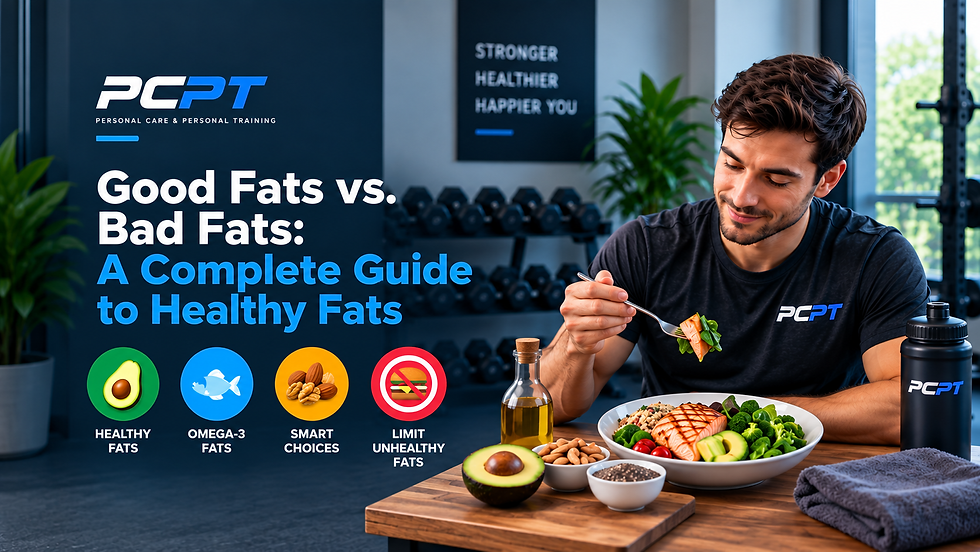
Fat is an important part of a healthy diet, but not all fats affect your body in the same way. Good fats vs bad fats is mainly about the type of fat you eat. Unsaturated fats, including monounsaturated and polyunsaturated fats, are generally the fats to choose more often. Saturated fats should be limited, while trans fats should be avoided.
Your body needs some fat for energy, to absorb vitamins A, D, E, and K, and to support your cells and other normal body functions. Fat also helps add flavor and satisfaction to meals. The problem is not eating fat itself. The bigger concern is eating too much of certain types, especially saturated and trans fats.
Learning the difference between these fats can make everyday food choices much easier. You do not need to follow strict food rules or remove fat from your diet. Understanding where different fats come from can help you choose foods that fit a balanced diet.
QUICK ANSWER: Good fats mainly include unsaturated fats, such as monounsaturated and polyunsaturated fats. They are found in foods such as olive oil, avocado, nuts, seeds, and fish. Saturated fats are best limited, while trans fats should be avoided. You do not need to remove all fat from your diet; choosing healthier sources and reasonable portions is more important.
Fast Facts: What You’ll Learn in This Guide
Why Your Body Needs Fat: How fat provides energy, helps absorb certain vitamins, and supports normal body functions.
Good vs. Bad Fats: The simple difference between unsaturated, saturated, and trans fats.
Healthy Fat Sources: Which everyday foods can give you more unsaturated fats.
Better Food Choices: Easy ways to reduce less healthy fats without changing your whole diet.
What Are Good Fats and Bad Fats?
Good fats usually mean unsaturated fats, which include monounsaturated and polyunsaturated fats. These fats are found in foods such as olive oil, avocado, nuts, seeds, and fish. Bad fats usually refer to trans fats and foods high in saturated fat. Trans fats should be avoided, while saturated fats are best limited.
What Are Monounsaturated Fats?
Monounsaturated fats are a type of unsaturated fat found in foods such as olive oil, avocado, peanuts, and almonds. They are a healthy type of fat to include in a balanced diet.
What Are Polyunsaturated Fats?
Polyunsaturated fats are another type of unsaturated fat. They include omega-3 and omega-6 fats and are found in foods such as fatty fish, walnuts, chia seeds, and flaxseeds.
What Is Saturated Fat?
Saturated fat is found in foods such as butter, fatty meats, cheese, full-fat dairy, and some plant oils, including coconut and palm oil. Too much saturated fat can raise LDL cholesterol, so it is best limited.
What Are Trans Fats?
Trans fats are mainly associated with partially hydrogenated oils. They can raise LDL cholesterol and lower HDL cholesterol, so they should be avoided as much as possible.
These four types of fat can be easy to mix up, so the table below gives you a quick comparison of where they come from and how they fit into a healthy diet.
Type of Fat | Common Sources | General Guidance |
Monounsaturated fat | Olive oil, avocado, nuts | Choose more often |
Polyunsaturated fat | Fish, walnuts, seeds | Choose more often |
Saturated fat | Butter, fatty meat, full-fat dairy | Limit |
Trans fat | Partially hydrogenated oils | Avoid |
The goal is not to remove all fat from your diet. It is to choose unsaturated fats more often, while limiting saturated fat and avoiding trans fats.
Myth vs. Fact About Dietary Fat
Myth | Fact |
All fat is bad. | Your body needs some fat to work properly. |
Eating fat always makes you gain weight. | Weight gain can happen when you regularly eat more energy than your body needs. Fat is also high in calories, so the amount you eat matters. |
Coconut oil is automatically healthy because it comes from a plant. | Coconut oil is high in saturated fat. Being plant-based does not automatically make an oil a healthier choice. |
Healthy fats can be eaten without limits. | Healthy fats are still high in calories. Reasonable portions matter. |
Omega-6 fats are bad for you. | Omega-6 fats are essential fats that your body needs from food. |
Why Does Your Body Need Fat?
Fat has several important jobs in the body. It provides energy, helps absorb vitamins A, D, E, and K, supports cell structure, and helps your body carry out normal functions.
Some fats are essential because your body cannot make them on its own. Fat can also make meals more satisfying and add flavor to food.
What Are Good Fats?
Most of the fats you choose more often should come from unsaturated sources. The important point is not to add more fat simply because it is considered healthy, but to make better choices when replacing less healthy options.
For example, changing the type of fat used in a meal can improve the overall balance of your diet without requiring a completely different eating pattern.
Why Are Omega-3 Fats Important?
Omega-3 fats include ALA, EPA, and DHA. ALA is an essential fat that must come from food, while EPA and DHA are mainly found in seafood.
These fatty acids have different roles in the body, so getting omega-3s from a variety of foods can provide more than one type.
What Are Bad Fats?
The term bad fats is often used as a simple way to describe fats that should be limited or avoided. However, saturated fat and trans fat are not handled in exactly the same way.
Saturated fat should be limited, while trans fat should be avoided as much as possible.
Why Should You Avoid Trans Fat?
Trans fat is linked with changes in cholesterol levels that can increase heart disease risk. Industrial trans fat was commonly produced using partially hydrogenated oils. These oils have been largely removed from the U.S. food supply, but checking packaged-food ingredients can still be useful.
Is Saturated Fat Always Bad?
A food that contains saturated fat is not automatically an unhealthy food. The bigger concern is how much you regularly consume. It can be more useful to look at what you eat most often and what could reasonably be replaced than to completely eliminate individual foods.
Is Coconut Oil a Good Fat or Bad Fat?
Coconut oil is high in saturated fat. Although it comes from a plant, that does not change its fat profile. It can be used in moderation, but it should not be treated as an unlimited source of healthy fat.
What Is Better to Use Instead of Saturated Fat?
Think about replacement rather than complete restriction. When possible, choose an option with more unsaturated fat instead of one that provides a large amount of saturated fat. This approach allows you to improve your overall diet without creating a long list of foods you can never eat.
What Foods Contain Healthy Fats?
Healthy fat sources can come from several food groups. Some useful options include:
Nuts and seeds
Soy foods such as tofu and edamame
Fish and seafood
Nut and seed butters
Foods made with unsaturated oils
You do not need to include every option. Variety is more useful than relying on one food every day.
Which Foods Are High in Unhealthy Fats?
Foods high in saturated fat can include fatty meats, processed meats, full fat dairy products, butter, cream, and some tropical oils. Some packaged foods may also contain significant amounts depending on their ingredients and preparation. Instead of thinking about these foods as completely off-limits, pay attention to how often they appear in your usual meals.
Can You Eat Healthy Fats While Trying to Lose Weight?
Yes. Fat can be part of a weight loss diet.
The main point is portion size. Fat provides about 9 calories per gram, so even a small serving can add a significant amount of energy. Weight management depends on your overall calorie intake and activity, not on removing fat from your diet completely.
Which Cooking Oils Are Better Choices?
Rather than looking for one “perfect” oil, consider the type of fat it provides and how you plan to use it. Liquid plant oils that are higher in unsaturated fats can be practical choices for everyday cooking. The amount you use also matters because oils are concentrated sources of calories.
How Can You Spot Trans Fat on Food Labels?
When buying packaged foods, check both the Nutrition Facts panel and the ingredient list.
Look for “partially hydrogenated oil” in the ingredients. This can indicate a source of industrial trans fat. Checking both parts of the label is useful because the Nutrition Facts panel and ingredient list provide different information.
How Can You Replace Less Healthy Fats With Better Choices?
You do not need to completely change your meals. A few simple substitutions can change the type of fat in a meal while keeping the rest of it familiar.
Instead of | Try |
Butter for some cooking | A liquid plant oil |
Fatty meat often | Leaner meat or fish |
Processed meat often | Beans, lentils, fish, or tofu |
Fried foods often | Baked, grilled, or roasted foods |
Choose substitutions that fit the foods you already enjoy. Simple changes are usually easier to maintain than a complete diet overhaul.
How Much Fat Should You Eat Each Day?
Your ideal fat intake depends on your total calorie needs, age, activity level, and overall diet. For adults, 20% to 35% of daily calories from fat is the general recommended range.
The source of those calories matters too. A diet where most fat comes from unsaturated sources is different from one that gets a large share from saturated fat. If you have specific medical or nutrition needs, your individual target may be different.
What Are Some Simple Ways to Eat More Healthy Fats?
You do not necessarily need to add more food to your diet. Instead, look for opportunities to replace one ingredient with another. You can also make label reading part of your normal grocery routine. Over time, these small decisions can help you become more aware of the types of fat in the foods you regularly buy.
Can a Personal Trainer Help With Your Fitness Goals?
Food is only one part of a healthy lifestyle. Regular exercise can help improve strength, endurance, mobility, and overall physical fitness.
A personal trainer can help you learn proper exercise form and build a workout routine that fits your fitness level. Your routine can also change as your strength and fitness improve. You do not need to begin with difficult workouts. A steady routine that fits your daily life can be easier to maintain.
Where Can You Get Personal Training in Cincinnati?
Personal Care and Personal Training (PCPT) offers private, one-on-one personal training in Cincinnati for people who want individual instruction and a fitness routine built around their needs.
The private training setting allows clients to work directly with a personal trainer. Sessions can be adjusted for different fitness levels, goals, abilities, and progress. Training can support general fitness, strength, cardiovascular fitness, flexibility, weight-management goals, and overall physical conditioning. Fitness assessment options are also available.
At PCPT, the studio is located at 110 W. 15th Street, Cincinnati, Ohio 45202. You can call (513) 999-0121 to learn more about personal training and available assessment options.
3 Simple Steps to Make Better Fat Choices
Think about replacement. Look for simple ways to change the type of fat in your regular meals.
Pay attention to portions. Even nutritious fat sources can add significant calories.
Read packaged-food labels. Check the Nutrition Facts panel and ingredient list when needed.
Conclusion
Understanding good fats vs bad fats is not about removing fat from your diet. Your body needs fat, but different types play different roles in a healthy eating pattern.
A practical approach is to include unsaturated fats regularly, keep saturated fat in moderation, and avoid trans fat. Portion size also matters because fat provides more calories per gram than protein or carbohydrates.
You do not need to completely change the way you eat. Small, realistic adjustments can make your meals more balanced while still allowing you to enjoy the foods you like.
Regular exercise is another important part of a healthy lifestyle. If you want support with building a workout routine around your fitness level and goals, Personal Care and Personal Training (PCPT) offers private, one-on-one personal training in Cincinnati.
Frequently Asked Questions
What are good fats and bad fats?
Good fats generally include unsaturated fats. Saturated fats are best limited, while trans fats should be avoided.
Which fats are good for you?
Unsaturated fats are generally the types to choose more often as part of a balanced diet.
Is saturated fat bad for you?
Too much saturated fat can raise LDL cholesterol, so it is generally recommended to limit it.
Is coconut oil a healthy fat?
Coconut oil is high in saturated fat. It can be used in moderation but should not be treated as an unlimited healthy fat.
Why are trans fats bad?
Trans fats can raise LDL cholesterol and lower HDL cholesterol. Higher intake is associated with greater heart disease risk.
Can healthy fats help with weight loss?
Healthy fats can fit into a weight-loss diet. They are high in calories, so the amount you eat still matters.
Are omega-6 fats unhealthy?
No. Omega-6 fats are essential fats that your body needs from food.
Which cooking oils are better choices?
Choose oils based on their fat profile, how you plan to use them, and the amount you use.



Comments